Close Menu
    Facebook X (Twitter) Instagram
    Trending
    • CYD? 2026: A vibrant display of exceptional talent
    • A Younger Wave
    • John Phillips Hall Closed
    • More Than Just Apples?
    • On Your Radar: pushbike
    • Shivelin Man: Wood Fired Shack
    • The Tale Of Two Halves
    • Upcoming In Pontio…
    Facebook X (Twitter) Instagram YouTube Flickr
    Seren
    • News & Politics
      1. Local News
      2. UK News
      3. Uni News
      4. World News
      5. Politics
      6. Comment
      7. Business
      Featured

      SABB Election: The Full Result Breakdown

      By Emily ReadMarch 20, 20210
      Recent

      A Younger Wave

      November 1, 2026

      John Phillips Hall Closed

      October 29, 2026

      Bangor University Students Protest Data Centre Plans

      October 15, 2026
    • Arts & Culture
      1. Books
      2. Games
      3. Film
      4. Music
      5. TV
      6. Creative Corner
      Featured

      Bangor alumni podcast earns Hollywood cameo & BBC features

      By Amelia SmithMarch 7, 20210
      Recent

      CYD? 2026: A vibrant display of exceptional talent

      November 1, 2026

      On Your Radar: pushbike

      October 26, 2026

      Upcoming In Pontio…

      October 15, 2026
    • Lifestyle
      1. Fashion
      2. Food and Drink
      3. Social
      4. Health and Beauty
      5. Travel
      Featured

      Country Highlight: The Netherlands

      By Emily ShoultsMay 6, 20220
      Recent

      Shivelin Man: Wood Fired Shack

      October 26, 2026

      Shivelin Man: Pepe’s

      October 15, 2026

      Gilmore Garms

      October 28, 2022
    • Discovery
      1. Science
      2. Environment
      3. History
      4. International
      Featured

      Brewing up a Storm: The History of Guinness

      By Emily ReadMarch 20, 20210
      Recent

      More Than Just Apples?

      October 26, 2026

      Stamps Used to Mean Something: A Dying Form of Political Art

      October 15, 2026

      Messages from the Margins

      September 22, 2026
    • Sport
      1. Varsity 2019
      2. Varsity 2018
      3. Varsity 2017
      4. Varsity 2016
      5. Varsity 2015
      6. Varsity 2014
      7. Varsity 2013
        • Varsity 2013 Results
        • Varsity 2013 – In tweets
      Featured

      Bangor Muddogs’ American Football: a young woman finding her place

      By Jade HillMarch 23, 20210
      Recent

      The Tale Of Two Halves

      October 26, 2026

      Padel, worth the hype?

      October 15, 2026

      Bangor University Sport – More than just a game

      September 22, 2026
    • Students’ Union
      1. Union News
      2. Societies
      3. Volunteering
      4. Clubs
      Featured

      INTERVIEW: Be Period Positive

      By Caroline CartmillMarch 17, 20210
      Recent

      Bangor University Sport – More than just a game

      September 22, 2026

      Interview: Lewis Thompson, VP Sport

      October 29, 2022

      En Garde!

      October 29, 2022
    • Print Issues
      • Current Issue
      • This year’s issues
      • Last year’s issues
      • Seren Archive
      • Seren Teams
    Seren
    Home»Discovery»Environment»CLIMATE CHANGE: CRISIS ON A LOCAL AND INTERNATIONAL SCALE
    Environment

    CLIMATE CHANGE: CRISIS ON A LOCAL AND INTERNATIONAL SCALE

    Samantha NewmanBy Samantha NewmanNovember 1, 2019No Comments4 Mins Read
    Share
    Facebook LinkedIn Email Reddit Threads Copy Link

    As I’m sure you’re aware of by now, climate change is causing a global emergency. This does not just affect the environment and the world: it is a human rights issue. Climate change affects food production and access to food, causes natural disasters that claim thousands of lives and destroys as many homes, and makes sea levels rise, which also displaces thousands of people. It is resulting in fundamental rights such as shelter, food, and clean water being denied to millions of people across the world. Millions of people across the world are standing up for our rights in this climate crisis.

    These detrimental effects are not only occurring in the developing countries of the world, but here in Wales as well, where cities on the coast are most vulnerable. Citizens are bound to be relocated because climate change reverses the suitability of certain locations to support human habitation, often with no replacement or refunds in place. An example of this is Aberystwyth, where, in 2014, buildings were advised to evacuate due to tidal waves that flooded the promenade. Farmers are also challenged as waves are more frequent and storms are getting stronger and endangering their homes near the sea.

    In 1997, Friends of the Earth Cymru estimated that the sea level would rise twenty centimetres, meaning that whenever there is a storm, marginal areas near the sea will flood more frequently. Agriculture was reported to be affected as well by the news platform LifeGate in 2018, due to a warmer climate which would interfere with the growth of healthy natural products.

    This situation will only worsen, with excessive rain in autumn and higher temperatures during the whole year. However, preventing climate change from getting worse is still a possibility. To accomplish this, there needs to be an understanding and motivation to help by people in our society on a micro and macro level. The Wales Council for Voluntary Action (www.wcva.org.uk) provides information on how you can contribute to the climate crisis happening in Wales.

    ACTIVIST OF THE MONTH: Autumn Peltier
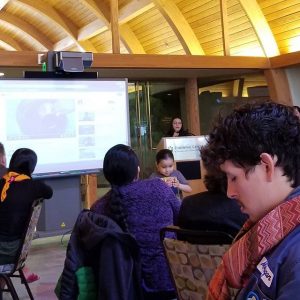
    Autumn Peltier, 15, is one of many young activists experiencing what has been branded ‘climate anxiety’ and deciding to speak up about it. As an Anishinaabe member of the Wikwemikong First Nation from Ontario, Canada, Peltier has brought awareness to the effects of this crisis on indigenous communities, whose voices are often drowned out by those of more privileged activists.

    Her fight for water protection, inspired by her aunt Josephine Mandamin, began at age 8 when she realised that not everybody in Canada had access to clean water the way she did growing up. Many First Nation communities have boil water advisories which inform them whether their water supply might be contaminated, and therefore lead to illnesses like typhoid, cholera and dysentery upon drinking, and even cancers caused by toxins passed through fish. This exploitation of natural resources threatens indigenous people in particular, as the destruction of their sacred water and ancestral lands leads not only to physical death, but also cultural genocide by severing their relationship with the earth.

    Peltier, however, is not ready to give up. In 2016 at a meeting of the Assembly of First Nations, she confronted Prime Minister Justin Trudeau about his support for pipeline projects that endanger her people’s communities. This year, she was named Chief Water Commissioner by the Anishinabek Nation and later addressed the world leaders at the UN for the second time, saying, “Canada is not a third world country, but here in my country, the indigenous people live in third world conditions.”

    She was also nominated for the International Children’s Peace Prize in September, an achievement that, in celebrating her efforts, proves her title of ‘water warrior’ is an apt one.

    For more information on climate change, visit www.amnesty.org.uk

    By the members of the Writing Committee of the Amnesty International Bangor Student Group: Megan Husband, Lea Smailagich-Ilic, Sharon Padt and Olga Bialasik

    Avatar photo
    Samantha Newman

    Environment Editor | 19-21

    Related Posts

    North Wales Ramblings

    October 28, 2022

    Hamza Yassin: The Hard Work That Is Making Luck Happen

    October 28, 2022

    Student’s Union Hosts Repair Cafe for Sustainability Awareness Week

    October 28, 2022
    Leave A Reply Cancel Reply

    This site uses Akismet to reduce spam. Learn how your comment data is processed.

    MORE INFORMATION
    • ABOUT
    • ADVERTISE
    • CONTACT US
    • GET INVOLVED
    • MEMBERS
    Links
    • Bangor University Bangor University
    • Google+ Google+
    • Undeb Bangor Undeb Bangor
    About

    Seren is Bangor University Students’ Union’s English Language Newspaper

    We have editorial independence from both Bangor University and Bangor Students’ Union. Seren is written by students for students and we’d love you to get involved!

    Type above and press Enter to search. Press Esc to cancel.