Close Menu
    Facebook X (Twitter) Instagram
    Trending
    • CYD? 2026: A vibrant display of exceptional talent
    • A Younger Wave
    • John Phillips Hall Closed
    • More Than Just Apples?
    • On Your Radar: pushbike
    • Shivelin Man: Wood Fired Shack
    • The Tale Of Two Halves
    • Upcoming In Pontio…
    Facebook X (Twitter) Instagram YouTube Flickr
    Seren
    • News & Politics
      1. Local News
      2. UK News
      3. Uni News
      4. World News
      5. Politics
      6. Comment
      7. Business
      Featured

      SABB Election: The Full Result Breakdown

      By Emily ReadMarch 20, 20210
      Recent

      A Younger Wave

      November 1, 2026

      John Phillips Hall Closed

      October 29, 2026

      Bangor University Students Protest Data Centre Plans

      October 15, 2026
    • Arts & Culture
      1. Books
      2. Games
      3. Film
      4. Music
      5. TV
      6. Creative Corner
      Featured

      Bangor alumni podcast earns Hollywood cameo & BBC features

      By Amelia SmithMarch 7, 20210
      Recent

      CYD? 2026: A vibrant display of exceptional talent

      November 1, 2026

      On Your Radar: pushbike

      October 26, 2026

      Upcoming In Pontio…

      October 15, 2026
    • Lifestyle
      1. Fashion
      2. Food and Drink
      3. Social
      4. Health and Beauty
      5. Travel
      Featured

      Country Highlight: The Netherlands

      By Emily ShoultsMay 6, 20220
      Recent

      Shivelin Man: Wood Fired Shack

      October 26, 2026

      Shivelin Man: Pepe’s

      October 15, 2026

      Gilmore Garms

      October 28, 2022
    • Discovery
      1. Science
      2. Environment
      3. History
      4. International
      Featured

      Brewing up a Storm: The History of Guinness

      By Emily ReadMarch 20, 20210
      Recent

      More Than Just Apples?

      October 26, 2026

      Stamps Used to Mean Something: A Dying Form of Political Art

      October 15, 2026

      Messages from the Margins

      September 22, 2026
    • Sport
      1. Varsity 2019
      2. Varsity 2018
      3. Varsity 2017
      4. Varsity 2016
      5. Varsity 2015
      6. Varsity 2014
      7. Varsity 2013
        • Varsity 2013 Results
        • Varsity 2013 – In tweets
      Featured

      Bangor Muddogs’ American Football: a young woman finding her place

      By Jade HillMarch 23, 20210
      Recent

      The Tale Of Two Halves

      October 26, 2026

      Padel, worth the hype?

      October 15, 2026

      Bangor University Sport – More than just a game

      September 22, 2026
    • Students’ Union
      1. Union News
      2. Societies
      3. Volunteering
      4. Clubs
      Featured

      INTERVIEW: Be Period Positive

      By Caroline CartmillMarch 17, 20210
      Recent

      Bangor University Sport – More than just a game

      September 22, 2026

      Interview: Lewis Thompson, VP Sport

      October 29, 2022

      En Garde!

      October 29, 2022
    • Print Issues
      • Current Issue
      • This year’s issues
      • Last year’s issues
      • Seren Archive
      • Seren Teams
    Seren
    Home»Discovery»Science»Owl monkeys and the evolution of love
    Science

    Owl monkeys and the evolution of love

    Adam MorrisBy Adam MorrisMarch 20, 2013Updated:March 20, 2013No Comments2 Mins Read
    Share
    Facebook LinkedIn Email Reddit Threads Copy Link

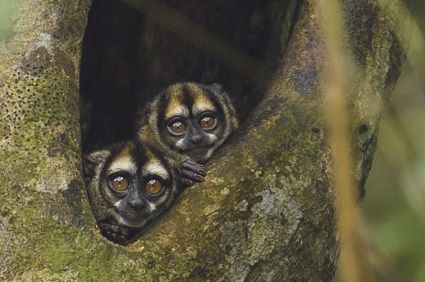
    HeelOnce owl monkeys in Central and South America meet their partner, they pair for life, having a baby once a year and never cheating or “divorcing”. But sometimes, lone adult owl monkeys who have yet to find their partner will attempt to break up established pairs, fighting viciously to drive one of the monkeys out.

    But new research suggests that these monkeys who are forced to form a new pair have fewer babies than owl monkeys in pairs which have never been broken up. Males who have remained with the same partner have, on average, 25% more offspring in ten years than those with multiple partners.

    This strong pair-bonding is thought to help with rearing the young; males take on most of the childcare responsibilities, and for them, a tightly monogamous relationship ensures he can be sure of the offspring’s paternity. Females benefit from the extra help provided by males, considering this, it makes sense that a weaker bond results in lower reproductive success.

    It’s speculated that this pair-bonding for reproductive success might have been the origin of love and society in humans. Researcher Eduardo Fernandez-Duque of the University of Pennsylvania thinks so;

    There’s some consensus among anthropologists that pair-bonds must have played an important role in the origin of human societies (…)  Call it love, call it friendship, call it marriage, there is something in our biology that leads to this enduring, emotional bond between two individuals that is widespread among human societies.

    anthropology bond evolution issue229 love monkey Science South America
    Adam Morris

    Related Posts

    Japan plan to release radioactive water into the ocean

    May 6, 2021

    The link between the AstraZeneca vaccine and blood clots

    April 29, 2021

    How 3D printing can revolutionise medicine

    April 15, 2021
    Leave A Reply Cancel Reply

    This site uses Akismet to reduce spam. Learn how your comment data is processed.

    MORE INFORMATION
    • ABOUT
    • ADVERTISE
    • CONTACT US
    • GET INVOLVED
    • MEMBERS
    Links
    • Bangor University Bangor University
    • Google+ Google+
    • Undeb Bangor Undeb Bangor
    About

    Seren is Bangor University Students’ Union’s English Language Newspaper

    We have editorial independence from both Bangor University and Bangor Students’ Union. Seren is written by students for students and we’d love you to get involved!

    Type above and press Enter to search. Press Esc to cancel.